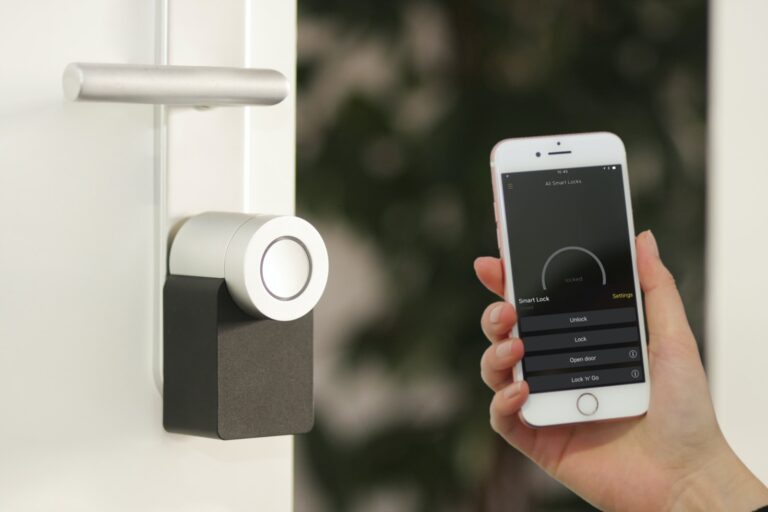
Security cameras have transformed from passive recording devices into live, interactive tools. Business owners check their premises from home, parents monitor their children's arrival from school, farm managers watch remote stores from Nairobi, and estate managers review gates from anywhere in the world. But none of this is possible without one essential ingredient: high speed internet. A CCTV system is only as good as the connection that carries its footage beyond the property.
At Wavelink Networks LTD, we design and install CCTV and network infrastructure across Nairobi and Kenya, and we see every day how bandwidth — not cameras — determines whether remote viewing actually works.
How Remote CCTV Viewing Actually Works
When you view a security camera on your phone, several things happen in a fraction of a second. The camera captures video, encodes it, and sends it across your local network to your router. Your internet connection then uploads that stream to a server or directly to your viewing device. The app on your phone decodes the stream and displays it as live video.
This chain has two critical bandwidth segments: the upload speed at the camera site, and the download speed wherever you are watching. Most Kenyan internet packages heavily favour download speeds, but remote CCTV viewing depends mostly on upload. A connection advertised at 50 Mbps down might offer only 10 Mbps up — and that upload capacity is what your cameras live on.
Why Slow Internet Ruins Remote CCTV
When bandwidth is insufficient, the problems appear immediately:
- Frozen or choppy video — the stream pauses, stutters, and skips, hiding the very moments you need to see.
- Low-resolution fallback — the system automatically drops from full HD to a blurry, low-quality feed to survive the connection.
- Dropped connections — the app loses contact with cameras, forcing constant reconnection.
- Delayed alerts — motion notifications arrive minutes after the event, defeating their purpose.
- Failed multi-camera viewing — opening a second or third camera overwhelms the link entirely.
- Unreliable cloud backup — footage meant for offsite storage uploads slowly or not at all.
In a security context, these are not minor inconveniences. A frozen feed during an intruder event means the system has failed at precisely the moment it was installed for.
How Much Bandwidth Does Remote CCTV Actually Need?
Each camera consumes bandwidth continuously while being viewed, and periodically while recording or uploading. A rough guide per camera:
| Camera Resolution | Approx. Bitrate (Main Stream) | Cameras Supported on 10 Mbps Upload |
|---|---|---|
| 720p HD | 1–2 Mbps | 5–8 cameras |
| 1080p Full HD | 2–4 Mbps | 2–4 cameras |
| 2K/4MP | 4–6 Mbps | 1–2 cameras |
| 4K/8MP | 6–10 Mbps | 1 camera reliably |
These figures assume only one person is viewing. If two or three users watch different cameras simultaneously — say, an owner in Nairobi and a manager in Mombasa — the upload requirement doubles or triples. Add cloud recording, and the demands rise again.
This is why Wavelink Networks LTD always calculates total system bandwidth before recommending an internet package: the number of cameras, their resolution, recording schedules, remote viewing habits, and whether other services share the same connection.
The Hidden Problem: Shared Networks
In many Kenyan homes and businesses, CCTV shares one internet connection with everything else — staff streaming videos, guests on Wi-Fi, cloud backups running in the background, and point-of-sale systems uploading transactions. Security footage competes for the same upload capacity and often loses, because camera streams are steady background traffic that other applications crowd out.
Professional solutions address this properly:
- Dedicated or segregated bandwidth — placing CCTV on its own connection, VLAN, or traffic-priority rule.
- Quality of Service (QoS) — configuring the router to prioritize camera traffic above entertainment traffic.
- Sub-streams for remote viewing — configuring cameras to send a lighter secondary stream to phones while the recorder keeps the full-quality version locally.
- Local recording with remote access — recording at full quality on site and viewing remotely at an appropriate resolution, so remote viewing never compromises forensic quality.
Key point: A common mistake is judging a CCTV connection by download speed. Always ask your provider about upload speed — it is the true measure of how well remote viewing will perform.
Reliability Matters as Much as Speed
High speed means little without stability. A connection that delivers 20 Mbps most of the day but drops every evening will make camera feeds unreliable exactly when businesses close and security matters most. Latency matters too: high ping times cause lag between an event occurring and it appearing on your screen, which is critical when verifying alarms or dispatching guards.
When Wavelink Networks LTD assesses a site for remote CCTV, we test not only speed but consistency — sustained throughput, latency, jitter, and behaviour during peak evening hours. We also design for power interruptions: routers and recorders on UPS units keep cameras recording and reachable even when the mains supply fails, a common scenario in many parts of Kenya.
Who Benefits Most from Proper Bandwidth Planning
- Business premises — shops, offices, and hardware stores monitored by owners from home.
- Agricultural properties — farms and rural stores watched remotely from Nairobi or abroad.
- Residences and estates — homeowners viewing gates, compounds, and interior cameras while travelling.
- Construction sites — managers tracking sites remotely to prevent theft of materials.
- Multiple-branch businesses — head office viewing several branches simultaneously, which multiplies bandwidth needs.
Modern CCTV delivers genuine peace of mind only when the footage actually reaches you. High speed, high upload, stable internet is the invisible half of every successful surveillance system — without it, the best cameras in the world become blind from a distance. Before installing or expanding a remote-viewing CCTV system, have your bandwidth professionally assessed and matched to your cameras, resolution, and viewing habits.
Wavelink Networks LTD provides CCTV installation, network design, bandwidth planning, and internet solutions across Nairobi and Kenya. Contact us today for a site survey and ensure your cameras deliver live, clear footage wherever you are.